Start with what an ad network does
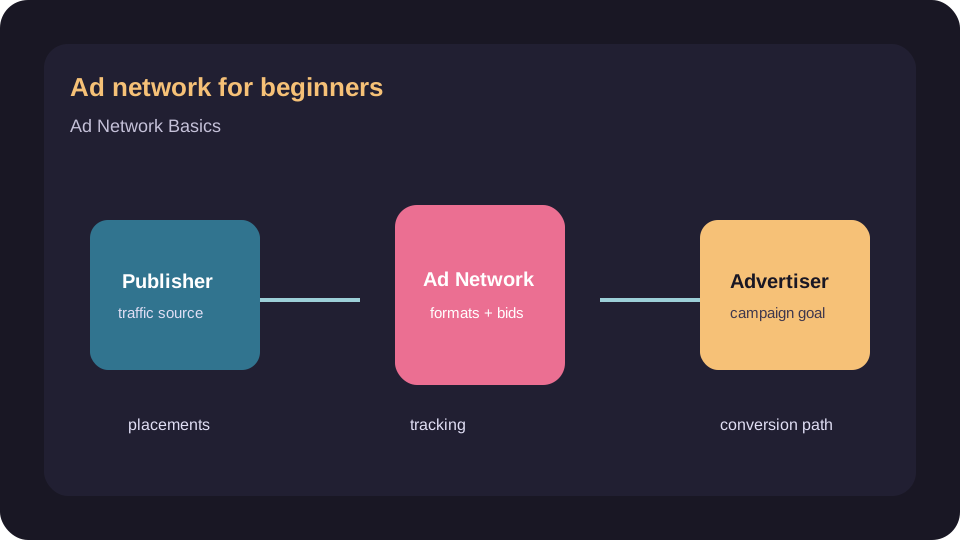
An ad network sits between two groups: advertisers who want to place ads and publishers who have space to sell. It gathers publisher inventory, lets advertisers buy across it with shared targeting and reporting, and handles the delivery and billing in between. For a beginner, the useful mental model is a marketplace that saves you from negotiating with every site or advertiser one by one.
The two ways in
You approach an ad network from one of two sides. As an advertiser you buy traffic to promote an offer; as a publisher you sell space to earn revenue. The controls, the metrics and the mistakes differ on each side, so the first thing a beginner should decide is which role they are actually in before touching a dashboard.
| Role | Goal | Watch |
|---|---|---|
| Advertiser | Buy traffic that converts | Cost per conversion, source quality |
| Publisher | Earn from inventory | Revenue per session, user experience |
The vocabulary you actually need
A handful of terms carry most conversations. Impressions are ad views; clicks are interactions; CPM is cost per thousand impressions; CPC is cost per click; fill rate is the share of requests that got an ad; and conversion is the action that matters to you. You do not need jargon beyond this to run a first, careful campaign.
A sensible first move
Whichever side you are on, start small and measured. Advertisers should pick one offer, one format and a losable budget with tracking live before launch. Publishers should add one format, cap its frequency and watch whether returning visitors hold up. In both cases the beginner win is a clean, readable test, not an ambitious one.
Ready to compare options?
Open the tracked provider page after matching the offer to ad network for beginners requirements.