Two sides of the same market
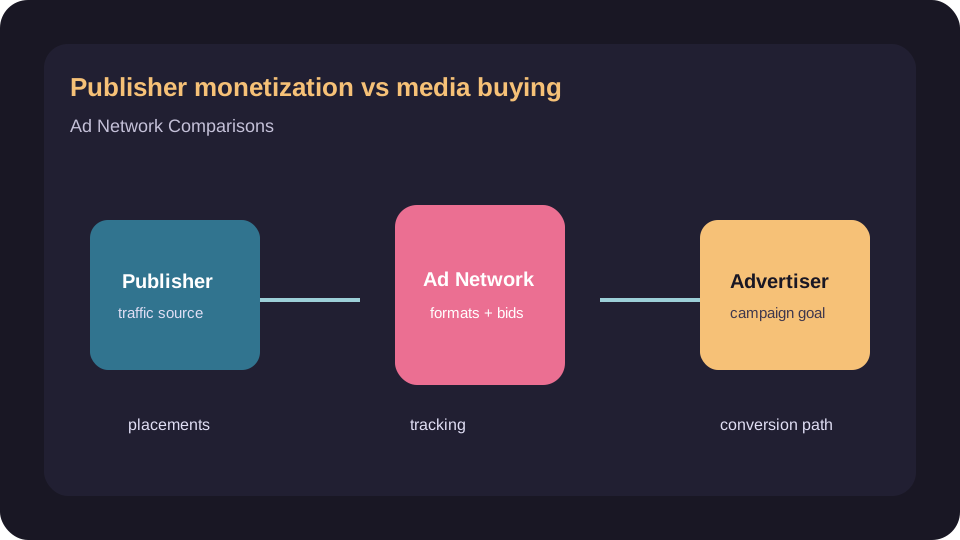
Publisher monetisation and media buying are the two ends of the ad-network transaction. A publisher sells inventory to earn from an audience they already have; a media buyer spends money to acquire an audience they do not. Understanding both clarifies the whole system, and many performance marketers eventually do both, buying traffic for offers while monetising sites they own.
| Publisher monetisation | Media buying | |
|---|---|---|
| You have | An audience | A budget and an offer |
| You want | Revenue per session | Conversions per spend |
| Main risk | Losing the audience | Spending without converting |
| Key skill | Placement and format balance | Targeting and creative testing |
What each side optimises
The publisher optimises revenue per session while protecting engagement and return visits, since the audience is the asset. The media buyer optimises cost per conversion while protecting budget, since money is the asset. The metrics differ, but both come down to the same habit: measure carefully, change one thing at a time, and keep only what the data supports.
How the two inform each other
Doing both makes you better at each. Buying traffic teaches a publisher which formats and placements advertisers value and pay for. Running a site teaches a buyer how publishers think about user experience and why aggressive placements burn out. The shared lesson is that sustainable results beat short-term spikes on either side.
Choosing where to start
If you already have traffic, start with monetisation, because you are earning from an asset you own. If you have an offer and a budget, start with media buying. Whichever you choose, the transferable skill is disciplined measurement, which is why the two roles reward the same mindset even though the dashboards look different.
Ready to compare options?
Open the tracked provider page after matching the offer to publisher monetization vs media buying requirements.